Signs it may be time to repot indoor plants:
- your plant has stopped growing
- your plant looks weak or withered
- plant roots are visible on surface soil
- plant roots are peeking out of bottom potholes.
How to repot your plants
1-Pre-water the plant one day before repotting
A well-watered plant will better endure the soil change and any possible root damage by helping the soil stay in one piece when it is moved.
2-Prepare a new pot for planting
Preparation depends on the material of the new pot:
- Unglazed clay: Sink into water a few hours before repotting so the clay won’t suck moisture from the soil.
- Pot without drainage holes: Add a 2–4 cm layer of small stones, or similar, to the bottom of the pot.
- Pots with drainage holes: Cover it with a filter cloth, coffee filter or piece of paper towel to avoid soil falling out.
3-Add the first layer of soil
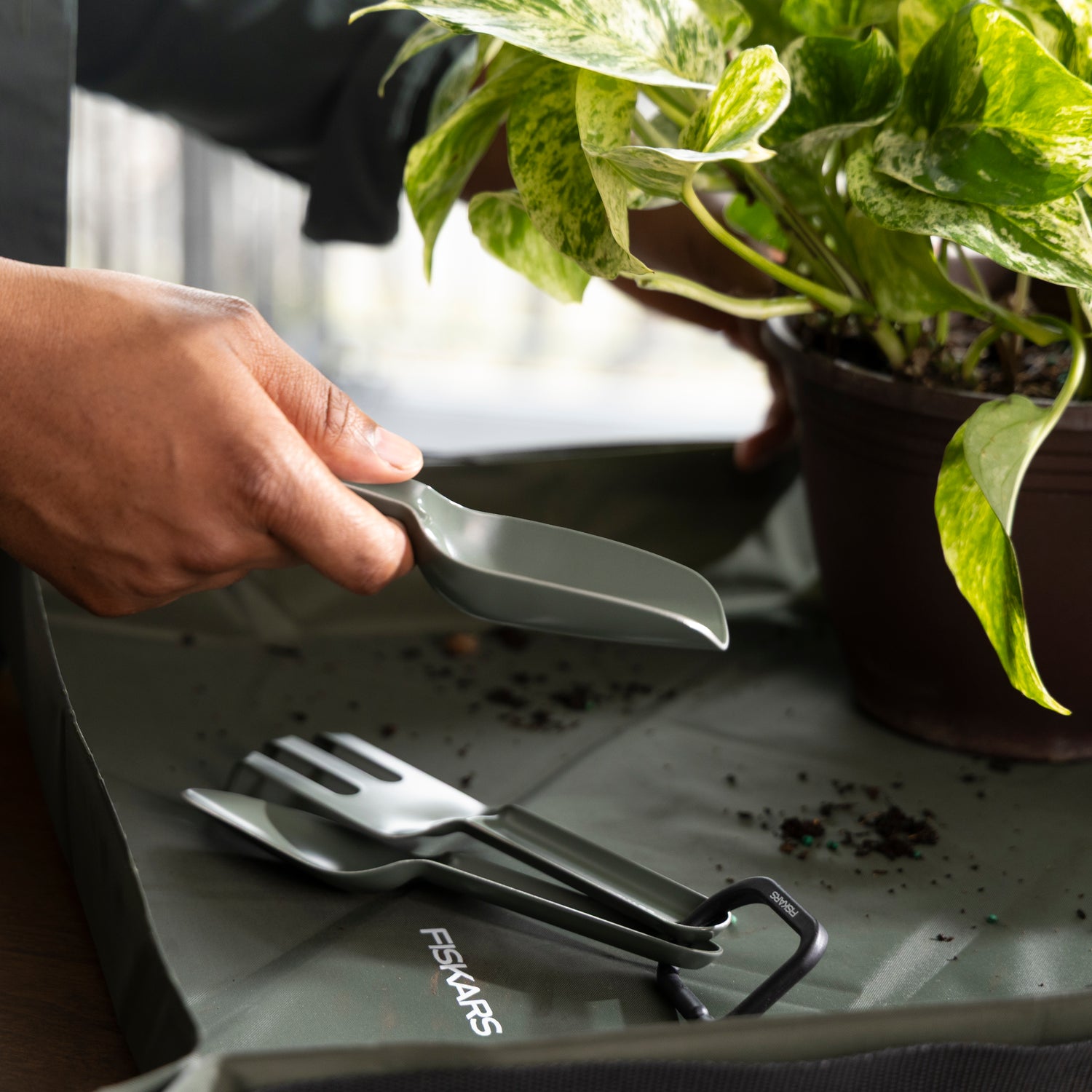
Add soil to the bottom of the new pot, and gently move the plant into the new pot.
4-Pack soil around new plant
Fill any empty space with new soil, patting soil to make it firm.
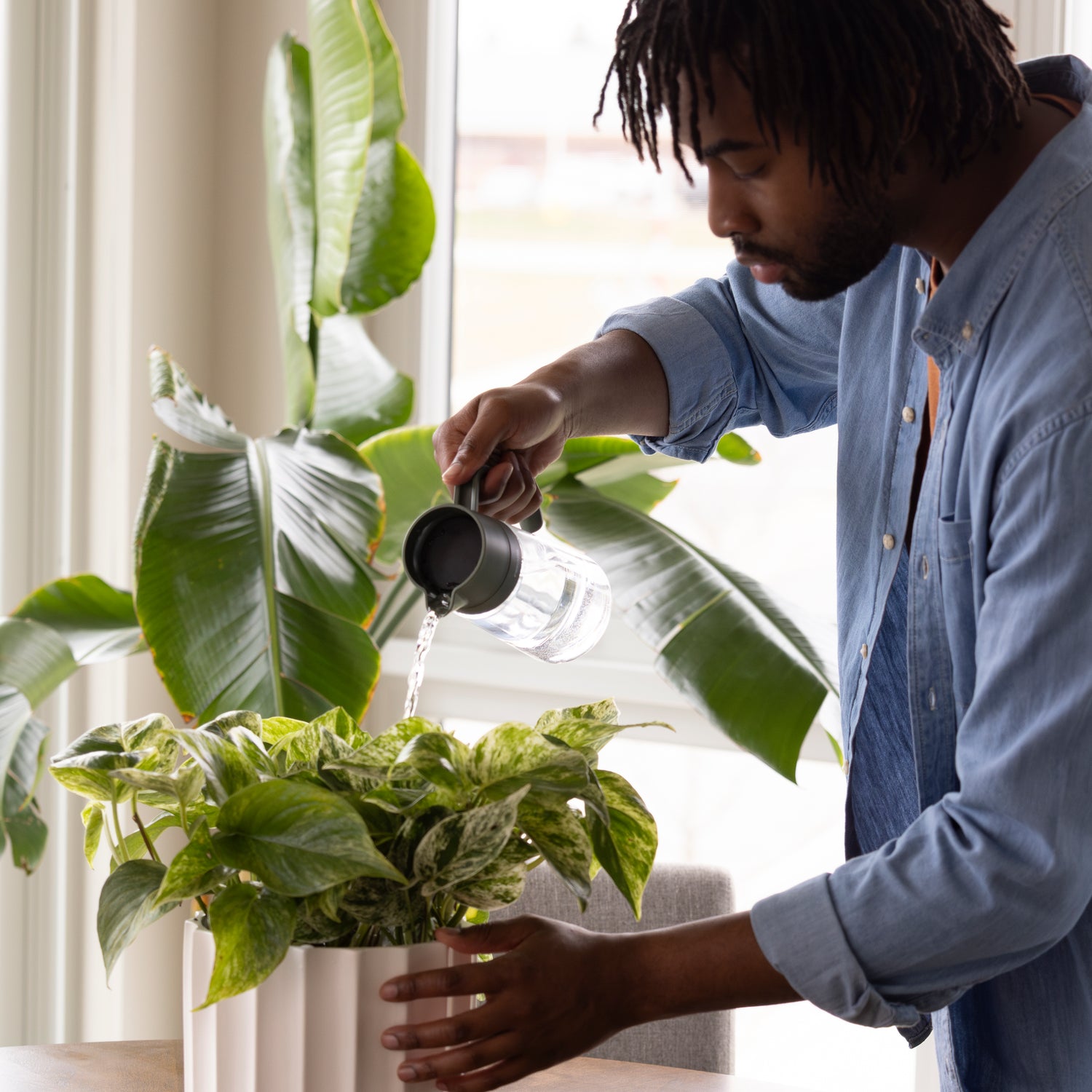
5-Water the plant
Generously water your newly repotted plant to give it a strong start.

Repot young houseplants every spring while they have the energy to grow
- If the plant is drooping due to heavy foliage or roots are showing from the bottom, it’s time for a new pot.
- Select a new pot that is about 1 cm larger in diameter.
- Especially beneficial for fast-growing trailing plants like inch plant, chain of hearts or begonias.
Mature and large houseplants only need repotting every 3 to 4 years
- Select a new pot that is 2–3 cm larger in diameter.
- In the intervening years, replace a few centimeters of topsoil with a fresh layer of potting soil.
- Common plant species: Devil’s vine or Giant monstera.